
Managing Operational Complexity in a Growing Construction Company
Unlock Operational Freedom in Your Business
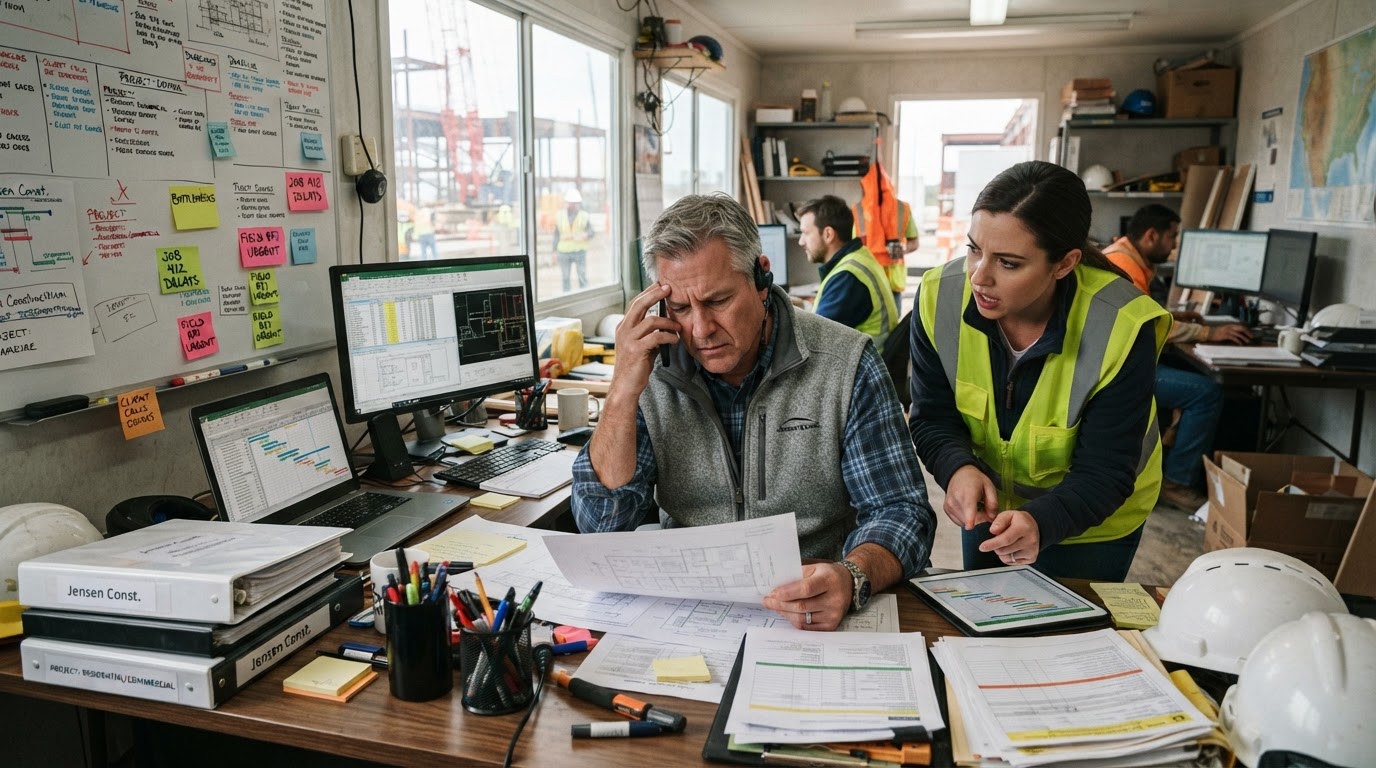
When revenue rises but founder stress rises with it, the business is usually outgrowing the way it is being run. In construction, that shows up fast: decisions bottleneck, job details stay in the founder’s head, field and office communication gets messy, and every escalation lands on the same person. Simple Operations helps turn that strain into structure.
The short answer
Revenue growth does not automatically reduce founder stress. In construction, it often increases complexity faster than the company’s roles, rhythms, metrics, projects, and culture can absorb. Simple Operations helps reduce founder-dependent decisions, install a simple operating cadence, and make ownership visible across office and field.
Reviewed by Gabe ArnoldUpdated
Why does revenue growth make a construction founder feel more stressed?
Revenue growth can make a construction founder feel more stressed because the business gets more complex faster than the operating model can handle. More jobs, more subcontractors, more material coordination, more billing questions, and more escalations create pressure when the founder is still the default decision-maker for too many issues.
In construction, growth often exposes weak handoffs between estimating and build, inconsistent jobsite communication, and limited real-time visibility into margin. The founder starts spending more time answering questions than leading the business. That is not a demand problem. It is a capacity and structure problem.
What bottlenecks usually show up first?
The first bottlenecks usually show up in decision rights, communication, and job control. If change orders stall, schedules keep shifting, and the office waits on the founder to approve exceptions, the business is telling you it has not moved beyond founder memory and founder judgment.
Other common warning signs are repeated status questions, incomplete field reporting, and billing delays that pile up because no one owns the workflow end to end. When these issues live in the founder’s inbox and head, stress rises even while sales improve.
How do roles and delegation reduce founder overload?
Clear roles reduce founder overload by making ownership visible before problems turn into interruptions. Simple Operations emphasizes roles because people cannot own what has never been defined. In a construction company, that means clarifying who owns estimating handoffs, procurement, field updates, change orders, job costing, and closeout—not just who is “helping.”
Delegation becomes safer when the team understands the Four Levels of Delegation and the founder does not have to be involved in every decision. The point is not to disappear. The point is to move from being the answer key to being the leader who sets direction and protects standards.
What rhythms keep a contracting team aligned without constant interruptions?
A simple rhythm keeps construction teams aligned without forcing the founder into constant firefighting. Daily huddles, weekly planning, monthly review, and quarterly targets help office and field teams know what matters, where blockers live, and when decisions will be made. Meetings should have meaning, not drift into updates that could have been handled another way.
This matters in construction because work moves across many people and stages. When the rhythm is clear, escalations happen in the right place, project status becomes more visible, and the founder gets fewer random interruptions. That creates more calm without sacrificing control.
Which metrics matter most when stress is rising?
The most useful metrics are the ones that reveal margin, delivery, and capacity before the founder feels the pain. In construction, that usually includes job costing accuracy, change order tracking, billing flow, schedule reliability, safety compliance, and subcontractor accountability. The point is to track what helps you see reality early.
Simple Operations teaches founders to track progress, not just activity. If the team is busy but margin is unclear, billing is late, or rework is climbing, the business is not getting healthier. Visible metrics help the founder lead with facts instead of carrying everything mentally.
How do projects and culture make delegation stick?
Projects and culture make delegation stick by turning good intentions into repeatable behavior. Projects need a single owner, a clear outcome, and a deadline. In construction, that prevents bid-to-build gaps, change order drift, and “I thought someone else had it” confusion. Without that structure, delegation becomes another source of stress.
Culture matters because accountability only works when people actually use the system. Simple Operations emphasizes radical transparency, ownership, and clarity as kindness. When the team expects to report honestly, ask early, and leave every system better, the founder is no longer carrying the business alone.
Key takeaways
- Revenue growth can increase founder stress when operational complexity grows faster than the company’s structure.
- Construction bottlenecks often start with unclear decision rights, weak handoffs, and inconsistent job communication.
- Delegation works better when roles are defined and ownership is visible before problems hit the founder.
- A simple operating rhythm reduces interruptions by giving the team a clear place to raise issues and make decisions.
- Metrics matter when they reveal margin, delivery, and capacity early enough to act on them.
- Culture is what makes accountability stick after the initial excitement of new systems fades.
Putting it into practice
- Step 1
Clarify the founder bottleneck
List the recurring decisions, escalations, and approvals that still route through the founder. Separate truly strategic calls from decisions that can be owned by others. - Step 2
Define role ownership
Assign a single owner to each critical workflow such as estimating handoff, procurement, scheduling, billing, change orders, and closeout. - Step 3
Install a simple cadence
Use a daily, weekly, monthly, and quarterly rhythm so the team knows when to share updates, solve blockers, and review priorities. - Step 4
Track the right numbers
Choose a small set of metrics that show job profitability, schedule health, billing flow, and risk early enough to guide action. - Step 5
Make delegation safe
Use clear decision boundaries and practical standards so the team can act without waiting on the founder for every move.
Questions founders ask
Why does construction growth feel heavier instead of easier?
Because more revenue often brings more coordination, more decisions, and more exceptions before the company has built the structure to absorb them. The business gets bigger faster than the founder can personally manage it.
Is founder stress in construction a leadership problem?
It can be a signal of leadership constraints, but it usually reflects an operating model problem first. If roles, decision rights, and rhythms are unclear, the founder will stay trapped in daily control even with a strong team.
What is the fastest way to reduce interruptions?
Start by clarifying who owns what and when issues should surface. Then create a simple cadence so the team knows where decisions and updates belong instead of routing everything through the founder.
Should a growing contractor hire before fixing systems?
Usually no. Hiring without clearer roles and rhythms often creates more communication paths and more questions. Systems make hiring safer because new people step into structure instead of chaos.
What if the founder is the only one who knows the business?
That is a common sign of founder dependence, not a reason to keep everything centralized. The solution is to make the work visible through roles, documented workflows, and a repeatable operating cadence.