
Managing Operational Complexity in a Growing Remodeling Company
Unlock Operational Freedom in Your Business
When revenue grows but founder stress rises, your business is telling you the operating model has fallen behind the work. In remodeling, that usually means decisions, handoffs, client communication, and job details still depend too heavily on the founder instead of clear roles, rhythms, metrics, projects, and culture.
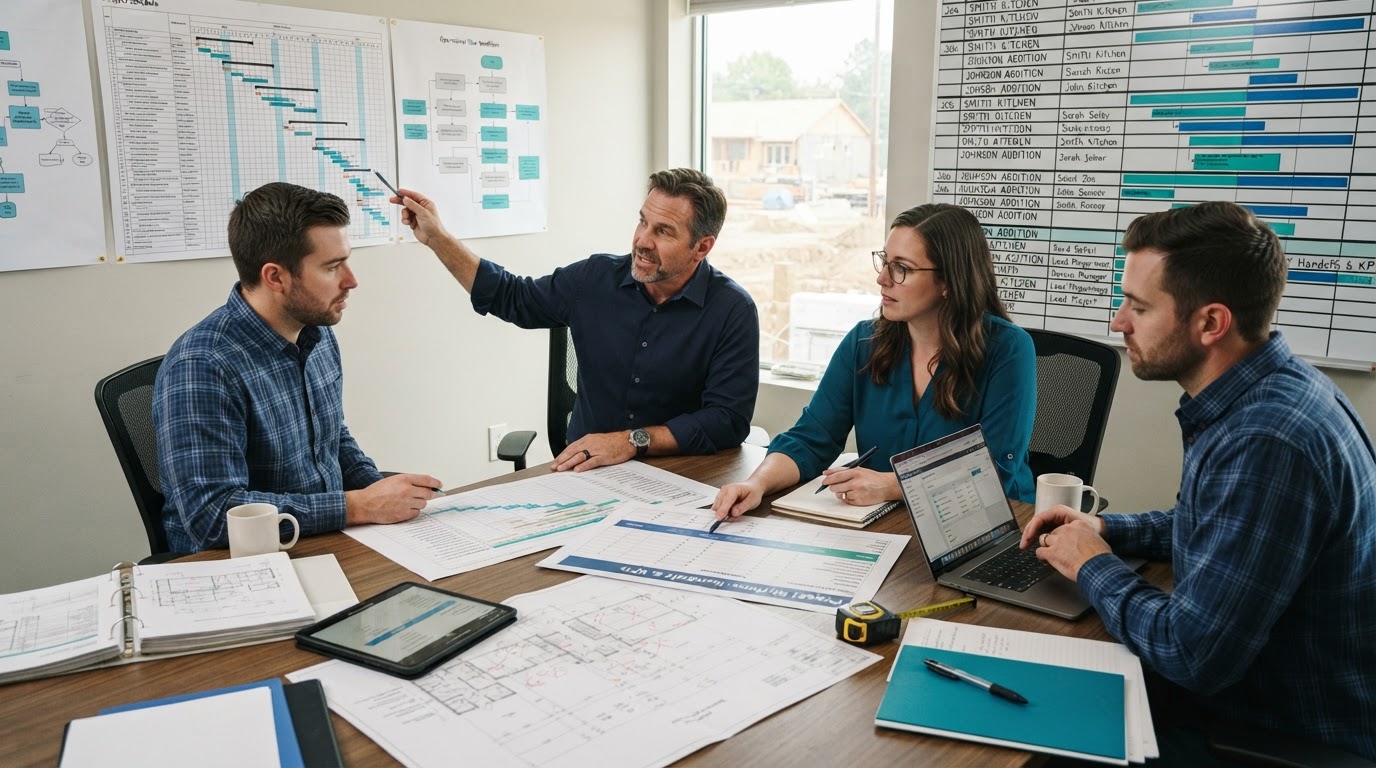
The short answer
Revenue growth in remodeling should create more capacity, not more chaos. If the founder is still the primary decision-maker for estimates, scheduling, change orders, escalations, and project corrections, stress will rise with revenue. Simple Operations helps growing remodeling companies replace founder dependence with clear roles, steady rhythms, visible metrics, owner-assigned projects, and a culture of accountability so the business can scale without routing every issue back through one person.
Reviewed by Gabe ArnoldUpdated
Why does a growing remodeling company feel more stressful?
A growing remodeling company feels more stressful when revenue increases faster than the systems that support delivery. More jobs, more trades, more client touchpoints, and more exceptions create more pressure if the founder is still carrying too many decisions and approvals. Stress is often a capacity signal, not a character flaw.
In remodeling, that pressure usually shows up in estimate turnaround, scheduling conflicts, permit delays, scope changes, material questions, and client updates. If every important issue routes back to the founder, the business may look successful from the outside while becoming harder to operate inside. Revenue grows, but peace does not.
What bottlenecks usually show up first in remodeling operations?
The first bottlenecks are usually decision bottlenecks and handoff problems. The team can do the work, but they pause while waiting for the founder to clarify scope, approve a change order, answer a vendor question, or settle a client issue. That creates context switching and slows the whole company down.
Inconsistent workflows also create hidden drag. When estimates, project starts, communication updates, and closeout steps depend on memory instead of a repeatable process, quality becomes uneven. Simple Operations treats that as an operating design problem, not a people problem.
How do roles and delegation reduce founder overload?
Roles and delegation reduce overload by making ownership visible and decisions easier to place. If the founder is the default answer for project management, estimating, scheduling, invoicing, or escalation handling, the company stays dependent on one person’s attention instead of building company capability. Clear ownership changes that.
Simple Operations uses the Four Levels of Delegation to help founders decide what needs direction, consultation, approval, or full ownership. That matters in remodeling because not every decision needs the founder’s touch, but standards still need protecting. Delegation works best when people know what they own, what good looks like, and when to escalate.
What rhythms help a remodeling team stay aligned without constant interruptions?
A simple operating rhythm gives the team a place to solve issues before they turn into fires. Daily, weekly, and monthly touchpoints create a predictable cadence for project review, schedule changes, client issues, and decision-making. That reduces interruptions because people know when and where to raise the right problems.
In remodeling, targeted interactions should fit the work instead of adding bureaucracy. The point is not more meetings. The point is meaningful meetings with a purpose: review active jobs, surface risks, confirm ownership, and keep work moving. When the cadence is steady, the founder is pulled into fewer emergency conversations.
Which metrics matter most when founder stress is rising?
The most useful metrics are the ones that show whether delivery, cash flow, and client experience are healthy. Revenue alone can hide problems like margin erosion, billing delays, unapproved scope, and schedule slippage. If the founder is stressed but the dashboard only shows sales, the business is flying blind.
Remodeling leaders should keep a small set of numbers visible and reviewed consistently. Estimate turnaround, change order capture, project profitability, schedule adherence, invoicing progress, and open client issues matter because they reveal operational strain early. Simple Operations emphasizes tracking what matters, not just what is easy to count.
How do projects and culture make delegation stick?
Projects and culture make delegation stick by turning good intentions into repeatable behavior. If projects are always owned by the founder, or if the team treats accountability like an emergency response, delegation will fail under pressure. A business cannot grow on trust alone; it needs structure that supports trust.
In a remodeling company, every important initiative should have one owner, a clear result, and visible follow-through. Culture matters because people need to bring up issues early, own mistakes, and learn from setbacks without fear. When clarity is kind and accountability is normal, the founder can step back without quality slipping.
Key takeaways
- Revenue growth in remodeling often exposes operational gaps faster than informal systems can absorb.
- Founder stress can be a useful signal that the company has outgrown founder-dependent operations.
- Clear ownership reduces repeat questions, project delays, and approval bottlenecks.
- A simple operating rhythm is more useful than more ad hoc meetings or more software.
- Remodeling leaders need a small set of visible metrics to protect margin, schedule, and client experience.
- Culture makes delegation sustainable by turning accountability into a normal part of the business.
Putting it into practice
- Step 1
Map the bottlenecks
List the recurring issues that keep landing on the founder: estimates, scheduling, change orders, client updates, vendor questions, and escalations. - Step 2
Clarify ownership
Assign one owner to each critical workflow and define what that person can decide without founder approval. - Step 3
Set a weekly rhythm
Install a predictable meeting cadence to review active projects, open risks, upcoming decisions, and client issues. - Step 4
Choose a few metrics
Track the numbers that show whether the business is healthy, especially profit, schedule, change orders, and billing progress. - Step 5
Make accountability visible
Keep project ownership and commitments in plain view so the team can follow through without relying on memory.
Questions founders ask
Why does revenue growth make remodeling founder stress increase?
Because growth adds complexity faster than the company’s operating model can absorb. More jobs, more decisions, and more moving parts expose weak delegation, inconsistent workflows, and founder dependence.
What is the biggest sign of founder dependence in remodeling?
The biggest sign is that important decisions keep routing back to the founder. If estimates, escalations, approvals, and exceptions all need the founder, the business is still built around one person.
Should a remodeling company hire more people to reduce stress?
Sometimes, but hiring alone usually adds more coordination if roles and rhythms are still unclear. Systems first, hiring second, is often the safer path when founder stress is already high.
How do operating rhythms help remodeling teams?
They create a predictable place to solve issues, review projects, and make decisions. That reduces interruptions and keeps the founder from being pulled into every daily question.
What metrics matter most in a growing remodeling business?
Focus on metrics that reflect delivery and profitability, such as estimate turnaround, change order capture, schedule adherence, invoicing progress, and project profitability.
How does Simple Operations help a remodeling founder?
It helps the founder build a simple operating rhythm around roles, rhythms, metrics, projects, and culture so the team can own more and the founder can lead without carrying everything alone.