
Managing Operational Complexity in a Growing Plumbing Company
Unlock Operational Freedom in Your Business
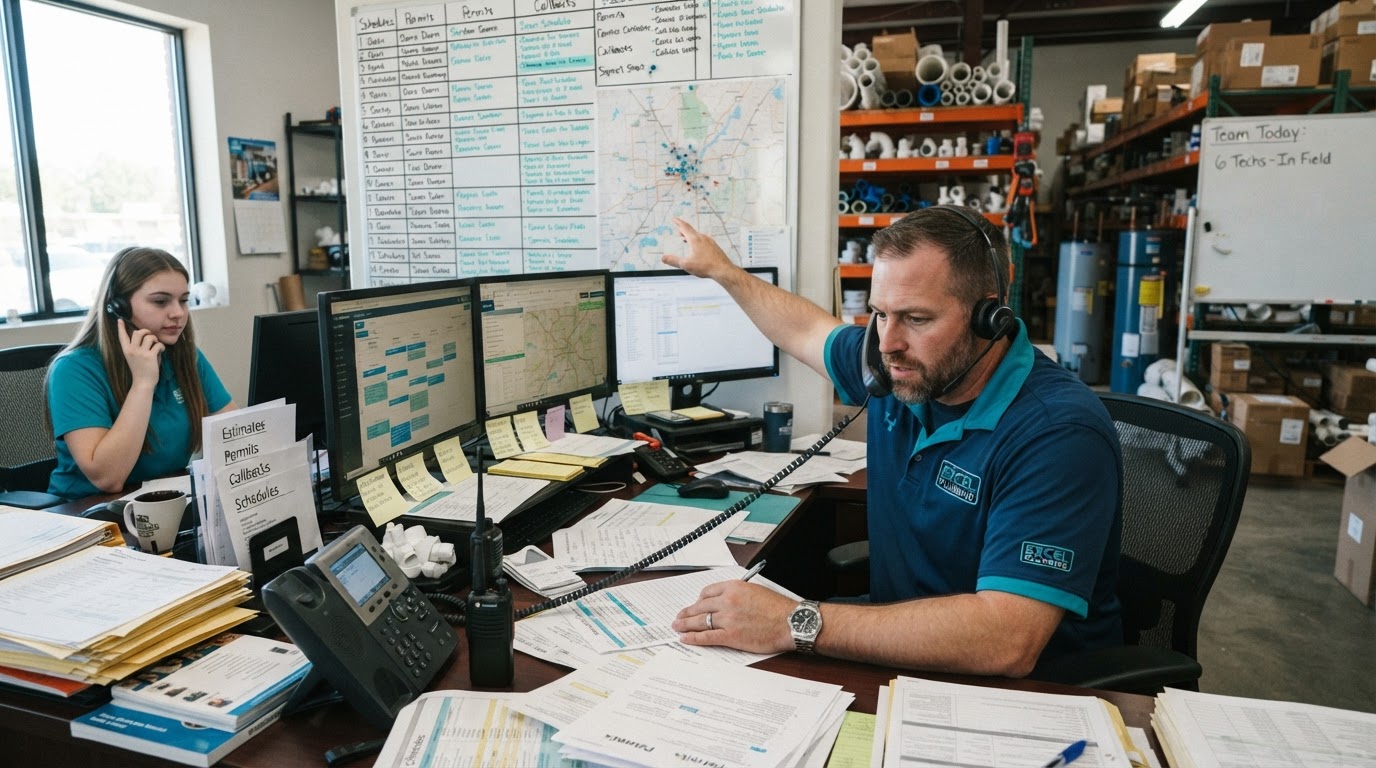
When revenue is rising but you feel more stressed, the problem is usually not demand. It is that the company has outgrown founder-dependent operations. In plumbing, that shows up fast: dispatch decisions, callbacks, estimating, parts, permits, and escalations all start routing through one person. Simple Operations helps you replace that pressure with a clear operating rhythm built on roles, rhythms, metrics, projects, and culture.
The short answer
For plumbing companies, rising founder stress is often a signal that growth is outrunning systems. Simple Operations helps clarify ownership, install a simple cadence, track a few meaningful metrics, assign projects to one owner, and build a culture where accountability is normal. That reduces firefighting and helps the founder lead instead of being the bottleneck.
Reviewed by Gabe ArnoldUpdated
Why does plumbing revenue growth make founder stress rise?
Because growth usually adds complexity faster than the business adds structure. In a plumbing company, more calls, more jobs, more trucks, and more customer touchpoints create pressure unless someone has clearly defined what happens, who decides, and when issues get raised. Without that, the founder becomes the default answer for everything.
The stress is often a leading indicator, not a personal weakness. It is the signal that dispatch, scheduling, estimating, parts, billing, and service recovery are still too founder-centered. When the founder is the escalation path for every exception, the business may be growing on paper while operational drag grows underneath it.
What bottlenecks usually show up first in a growing plumbing company?
The first bottlenecks are usually decision bottlenecks and handoff problems. Calls come in, but intake is inconsistent. Technicians need direction, but dispatch waits for approval. Estimates vary by person. Callback handling, parts issues, and customer complaints bounce back to the founder because no one else knows the threshold for action.
In plumbing, these bottlenecks are expensive because urgency is part of the business model. Emergency calls do not wait for clean communication. If the team lacks a simple process for routing work, documenting job details, and escalating only the right issues, the founder gets dragged into every fire even when the team is capable.
How do roles and delegation reduce founder overload?
Clear roles reduce overload by making ownership visible before there is a problem. When someone owns dispatch, someone owns estimating, someone owns parts coordination, and someone owns customer escalation follow-up, the founder no longer has to translate every decision. That is the difference between a company that relies on memory and one that relies on structure.
Simple Operations uses Four Levels of Delegation to help leaders decide how much ownership to give and how quickly. That matters in plumbing because not every task should be handled the same way. Some decisions need input, some need approval, and others should be fully owned by the person closest to the work. Delegation becomes safer when the expectations are clear.
What rhythms help a plumbing team stay aligned without constant interruptions?
A few steady rhythms keep the business calm. Daily huddles help the team surface urgent issues before they spill into the day. Weekly planning creates a place to review jobs, labor, scheduling conflicts, callbacks, and inventory concerns. Monthly reviews help the founder see patterns instead of only reacting to isolated problems.
Meetings must have meaning. In a plumbing company, that means each rhythm needs a purpose: what work is on deck, what is blocked, what metrics are off, and what decisions need to be made. When the team knows there is a reliable place to raise issues, they stop interrupting the founder at random times just to get unstuck.
Which metrics matter most when founder stress is rising?
The right metrics turn stress into something the team can see and manage. For plumbing companies, that usually means tracking a small set of operational numbers tied to dispatch, conversion, delivery, callbacks, and collections. The point is not to drown in reports. It is to know what is happening before it becomes urgent.
Simple Operations teaches founders to track progress, not just activity. That matters because a busy day is not the same as a healthy business. If the company is taking more calls but missing follow-up, losing margin on jobs, or letting callbacks pile up, the founder feels the pain first. Better metrics let the team respond earlier and with less drama.
How do projects and culture make delegation stick?
Projects and culture make delegation stick by turning good intentions into repeatable behavior. If the team knows which projects matter this quarter, who owns each one, and what success looks like, work stops drifting back to the founder for rescue. Culture then reinforces whether people bring problems with solutions or simply bring problems.
In Simple Operations, clarity is kindness. That is especially true in plumbing, where the consequences of ambiguity show up quickly in missed appointments, frustrated customers, rework, and margin erosion. When the culture rewards ownership, transparency, and follow-through, delegation stops feeling risky and starts becoming normal.
Key takeaways
- Founder stress is often a leading indicator that revenue growth has outpaced systems, delegation, and managerial capacity.
- In plumbing, the fastest-growing bottlenecks are usually dispatch, estimating, callbacks, parts coordination, and customer escalations.
- Delegation works better when ownership is visible and decisions have a clear level of authority.
- A few reliable rhythms matter more than random meetings when a service business is scaling.
- Metrics should show what is happening before it becomes urgent, not just how busy the team has been.
- Culture is what makes ownership and accountability stick after the founder stops intervening.
Putting it into practice
- Step 1
Map the founder bottlenecks
List the decisions, escalations, and approvals that keep routing back to you. In a plumbing company, that usually includes dispatch exceptions, estimate questions, callback issues, and vendor or customer complaints. - Step 2
Define one owner for each recurring area
Assign a single owner to dispatch, estimating, parts coordination, and customer recovery. Clear ownership reduces overlap and keeps the founder from becoming the answer key for every problem. - Step 3
Install a simple weekly cadence
Use daily huddles and weekly planning to surface issues early, review work in progress, and make decisions in a predictable place. The goal is fewer interruptions and faster resolution. - Step 4
Track a few meaningful metrics
Choose a small set of numbers tied to call handling, scheduling, job progress, callbacks, and cash collection. Review them regularly so the team can see trouble before it turns into a fire. - Step 5
Make accountability part of the culture
Set expectations that people bring solutions, not just problems, and that work is reviewed by outcomes rather than effort alone. That is what makes delegation safe as the company grows.
Questions founders ask
Why does my plumbing business feel harder as revenue grows?
Because the work is becoming more complex faster than your operating model is maturing. More jobs, more emergencies, more handoffs, and more moving parts create stress when roles and decision rights are unclear.
Is founder stress in a plumbing company a bad sign?
Not always. It is often a warning light that the company needs better structure. Stress can reveal where the founder is still the bottleneck and where the team needs clearer ownership.
What should a plumbing founder delegate first?
Start with the recurring decisions and handoffs that keep coming back to you: dispatch issues, estimate follow-up, scheduling changes, callback coordination, and escalation handling. Delegate the pattern, not just the task.
Do I need more software to fix operational complexity growth?
Usually no. Software can help, but it does not create role clarity, decision rights, or accountability by itself. The first fix is a simpler operating rhythm that the team will actually use.
How does Simple Operations help plumbing companies?
It helps you install five essentials: roles, rhythms, metrics, projects, and culture. That gives the team a clearer way to work and reduces the founder dependence that drives stress.