How Construction Company Founders Can Reduce Daily Firefighting
Unlock Operational Freedom in Your Business
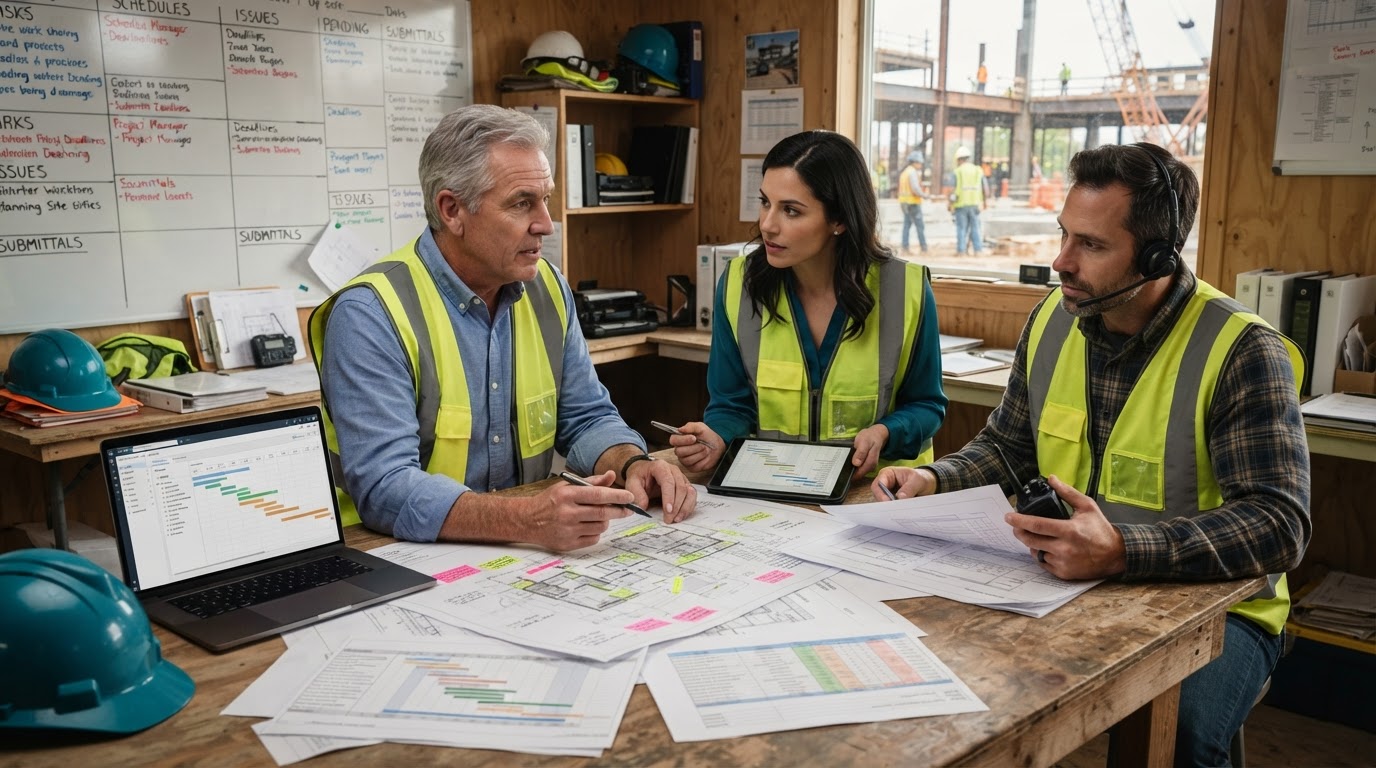
When revenue rises but stress rises too, growth is outpacing the way the company operates. In construction and general contracting, that usually means the founder is still carrying too many decisions, too many escalations, and too much invisible coordination for the business to feel stable.
The short answer
If your construction business is growing but your stress is increasing, the problem is usually not ambition. It is founder dependence, unclear roles, inconsistent rhythms, and too much operational complexity for one person to manage. Simple Operations helps replace that pressure with a clearer operating model.
Reviewed by Gabe ArnoldUpdated
Why does revenue growth make construction founders more stressed?
Revenue growth makes construction founders more stressed when complexity expands faster than the operating model. More projects, more subcontractors, more materials, and more jobsite variables create pressure if the founder is still the main decision-maker. The result is more context switching, more escalation, and less time to think.
In a contracting business, growth often looks healthy on the outside while the inside feels messier. The founder is pulled into estimating questions, scheduling conflicts, change orders, billing issues, and field problems that never seem to stay in one lane. Simple Operations helps by turning founder judgment into company-wide clarity so the business can carry more load without carrying the founder with it.
What operational bottlenecks usually show up first?
The first bottlenecks are usually decision delays, fragmented communication, and inconsistent handoffs between office and field. In construction, that can show up as bid-to-build gaps, late change order approvals, materials that do not arrive when needed, or project updates that live in texts and memory instead of one dependable place.
These problems are expensive because they create rework before anyone notices the pattern. They also keep the founder in firefighter mode, which makes strategic planning impossible. When the same questions keep coming back, the issue is rarely effort. It is usually missing ownership, missing rhythm, or missing visibility.
How do roles and delegation reduce founder overload?
Clear roles reduce overload because everyone knows who owns what, who decides, and who needs to be informed. When the founder is no longer the default approval gate for estimating, procurement, field coordination, billing, safety, or closeout, the team can move faster with less friction. Delegation becomes safer when ownership is visible instead of implied.
Simple Operations treats roles as one of five core principles, alongside rhythms, metrics, projects, and culture. That matters in construction because “just ask me” leadership creates dependence, not leadership. The goal is not to remove standards. It is to protect standards by making responsibility clear enough that the team can act without constant founder intervention.
What rhythms help a contractor stay calm and in control?
Rhythms help because they create a reliable place to surface issues before they become emergencies. Daily huddles, weekly check-ins, and monthly planning give the founder and the team a predictable way to review priorities, blockers, and next moves. That replaces random interruptions with intentional communication.
For construction companies, this kind of cadence is especially valuable because projects cross office and field boundaries all day long. A clear meeting rhythm keeps labor, subcontractors, materials, billing, and safety concerns visible without requiring the founder to chase every update. Meetings should have meaning, not become another layer of noise.
Which metrics matter most when stress is rising?
The most useful metrics are the ones that show project health early, not the ones that just prove activity. In construction, that usually means watching job costing, margin by project, schedule risk, change order status, billing progress, safety issues, and any compliance or documentation gaps that can delay work. Those numbers tell the founder whether the business is actually healthy.
Simple Operations emphasizes tracking progress, not just busywork. That is critical for contractors because a full calendar can still hide weak margin or poor control. Good metrics help the founder make better decisions without chasing every detail personally, and they give the team a clearer scoreboard to work from.
How do projects and culture make delegation stick?
Delegation sticks when every important project has one owner, a clear outcome, and a follow-up rhythm that keeps it moving. If work belongs to everyone, it often belongs to no one, and the founder ends up back in the middle. Clear project ownership is what turns good intentions into dependable execution.
Culture makes that possible because people need to believe that clarity is kindness. In a contracting company, accountability should feel like support, not punishment. When the team sees that roles, rhythms, and metrics are there to help them win, the founder stops being the hub for every issue and starts leading a business that can carry itself.
Key takeaways
- Revenue growth can make a construction founder more stressed when complexity grows faster than the operating model.
- The first operational warning signs are usually delays, weak handoffs, and repeated escalations.
- Clear roles reduce founder overload by making ownership and decision rights visible.
- A reliable meeting cadence helps office and field teams surface problems before they become emergencies.
- The best construction metrics show project health early, not just team activity.
- Delegation only sticks when projects have one owner and the culture supports accountability.
Putting it into practice
- Step 1
List the recurring founder interruptions
Write down the decisions, approvals, and escalations that keep coming back to you. Sort them by estimating, preconstruction, procurement, field management, safety, billing, and closeout. - Step 2
Assign one owner per critical workflow
Give each important area a single owner so responsibility is visible and easier to follow. Do not leave major workflows owned by the group or by assumption. - Step 3
Create a predictable operating rhythm
Install daily and weekly touchpoints that review priorities, blockers, and follow-up items. The goal is to reduce surprise and make communication reliable. - Step 4
Track a small set of meaningful metrics
Focus on the numbers that reveal whether projects are healthy: margin, job costing, change orders, schedule risk, billing, and compliance concerns. Use them to guide decisions, not just report activity. - Step 5
Make every key project accountable
Give each project one owner, a clear outcome, and a review point. If it still boomerangs to you, tighten the role, the rhythm, or the metric behind it.
Questions founders ask
Why does a construction business feel harder as it grows?
Because each new job adds more coordination, more decisions, and more chances for things to slip. If the company has not built clear roles and rhythms, the founder absorbs the pressure and the business feels heavier instead of stronger.
What is the clearest sign the founder is still the bottleneck?
If decisions, approvals, and escalations keep routing back to the founder, the company is still founder-dependent. That means the business is relying on one person’s memory and judgment instead of a repeatable operating system.
Will hiring more people fix founder stress?
Not by itself. If the business adds people without clearer ownership and decision rights, it usually creates more communication paths and more questions. That can increase stress before it reduces it.
What should a construction founder track each week?
Track the measures that show whether projects and operations are healthy: margin, job costing, schedule risk, change orders, billing progress, and safety or compliance issues. Those numbers reveal problems early enough to act.
How does Simple Operations help a contractor work less?
It replaces founder dependence with a simple operating model built on roles, rhythms, metrics, projects, and culture. That gives the team more ownership and gives the founder back time, focus, and steadier decision-making.